How are our Natural Areas doing?
Failing Grades
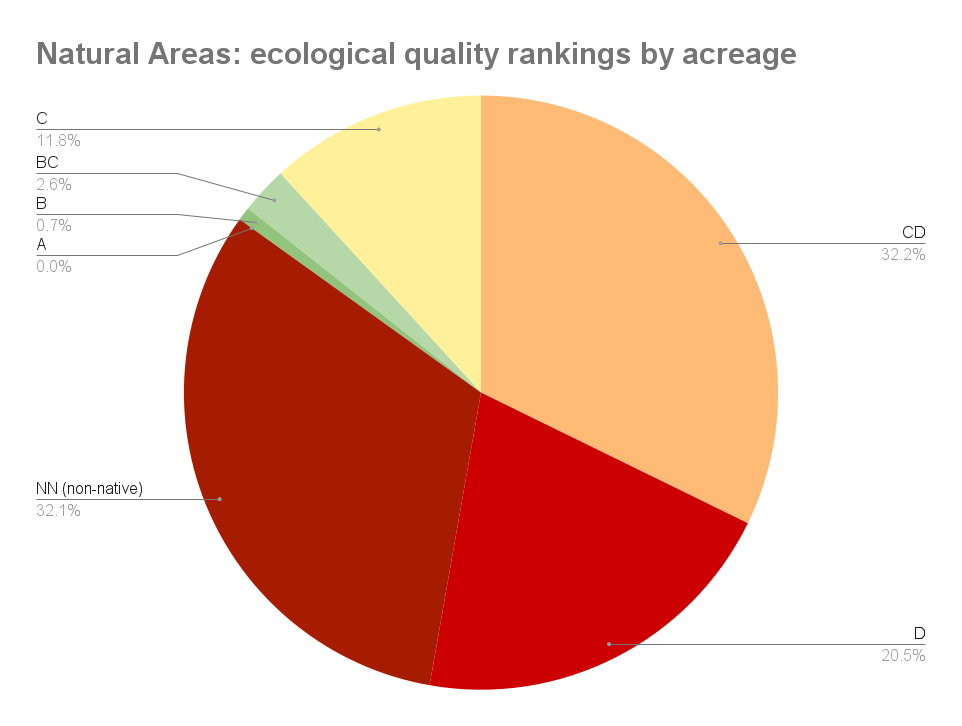
In terms of biodiversity and ecosystem integrity, our natural areas are not in good shape. In the 2021 MPRB Natural Areas Plan - Phase 2, ecologists assessed the quality of our designated natural areas. They used a letter grading system from A (highest quality) to D (poor condition) to rate plant communities. Many acres were left unrated because they were of such low quality that they were classified as non-native.
BY ACREAGE:
0% received an A rating
3.3% ranged from B to BC
84.8% ranged from CD to Non-native
A substantial majority of our Natural Areas are in poor condition.
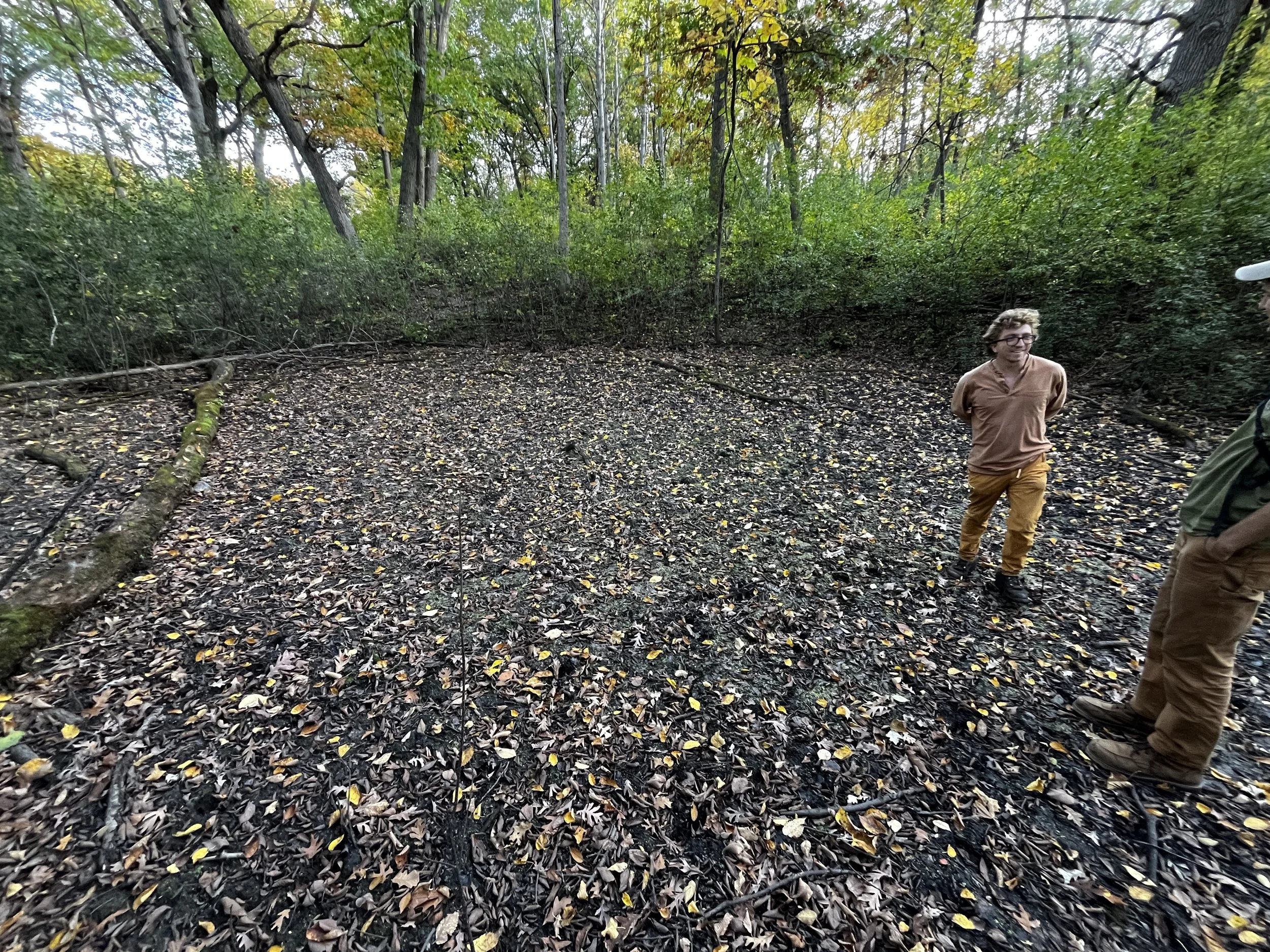
Vernal Pool surrounded by dense buckthorn regrowth several years after grant-funded removal.
Why are our Natural Areas in this condition?
Ecosystems face a variety of threats. Chief among them are fragmentation and displacement of native species by non-native invasive species. (Our focus here is on plants, though non-native insects and other animals sometimes also contribute to species losses.) The lack of capacity to effectively follow through on the actions we take to restore natural areas means they continue to fall short of recovery.
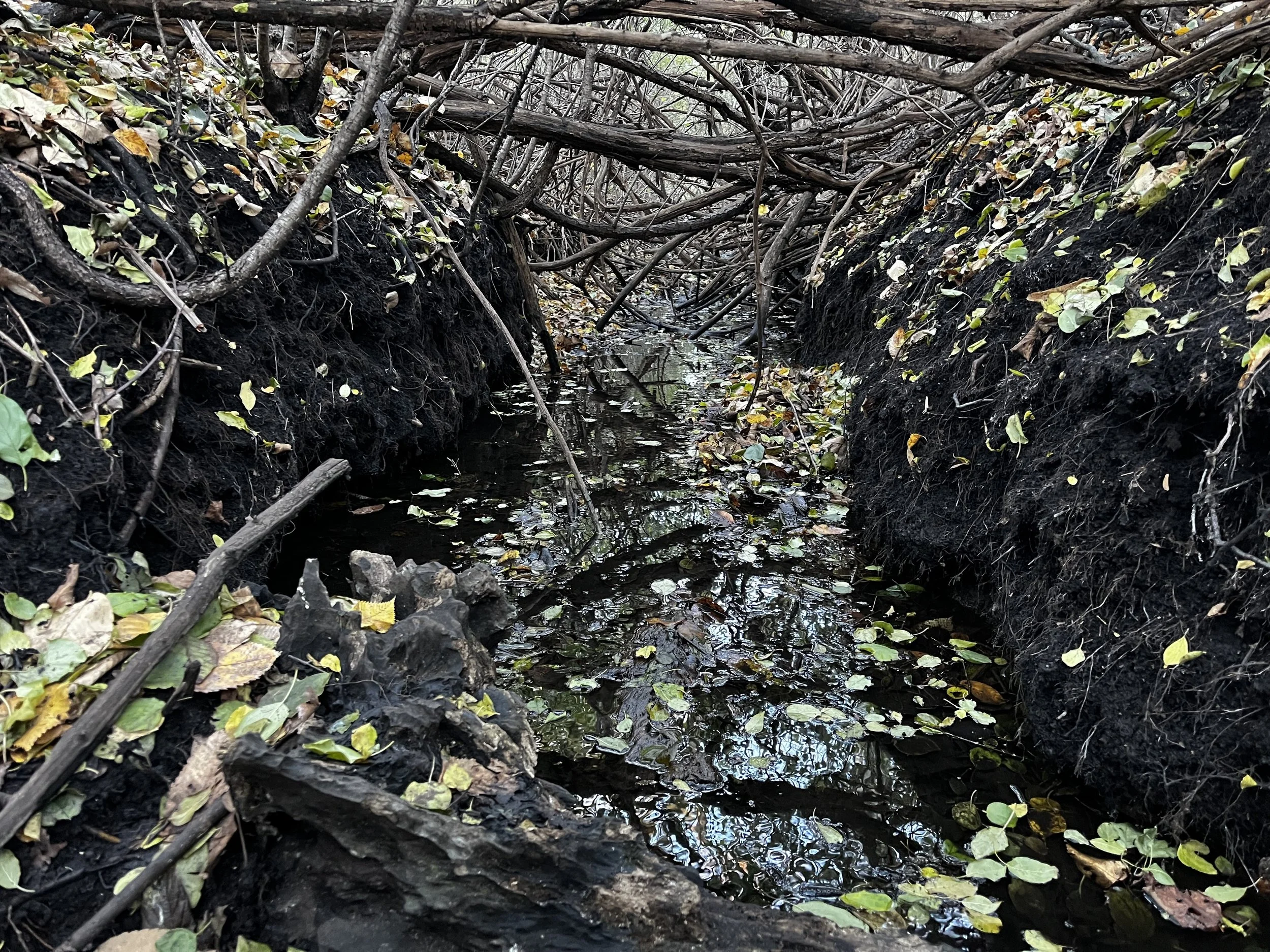
A carbon sink degrades in Wirth Park: eroding peatland gully with buckthorn debris and dense buckthorn regrowth.
Fragmentation
Fragmentation occurs when ecosystems are greatly reduced in size and isolated from other natural areas. Ecologists have shown that fragmentation inherently leads to species losses over time. Once vast, interconnected, and dynamic communities of native species—with large populations and broad gene pools—are now small and isolated. The term “extinction debt” refers to the species losses that are already effectively “baked in” due to current levels of fragmentation. Here in southern Minnesota, without significant action, this debt could result in an estimated 50% loss of all species!
Non-native invasive species
Non-native invasive plants—introduced intentionally or accidentally from other continents—compound the effects of fragmentation by displacing remaining native species. This poses a major problem for the food web, because plants that evolved elsewhere are far less likely to support native insects, birds, and other wildlife. Over time, these disruptions sever connections throughout the food web, leading to a collapse in biodiversity.
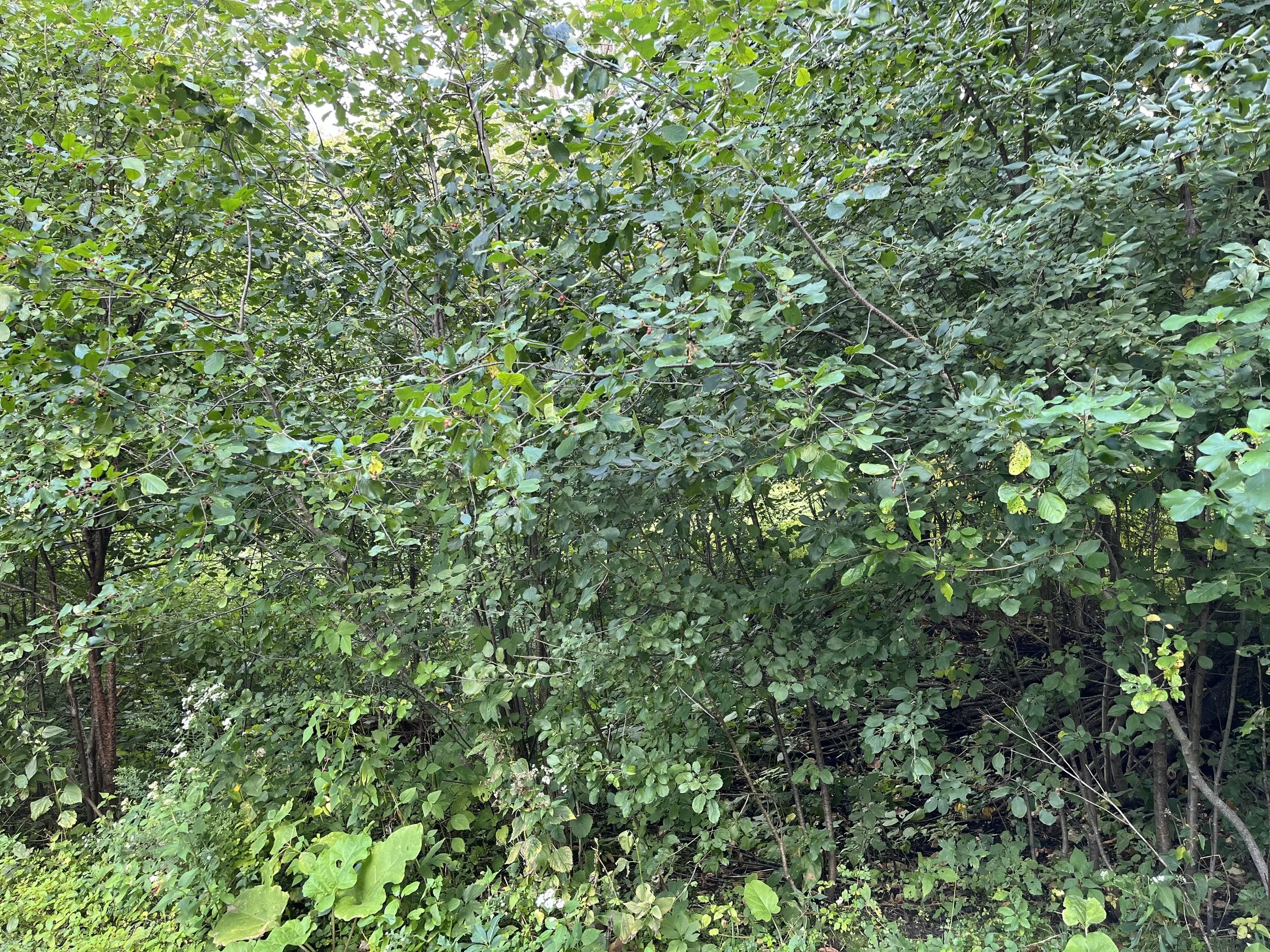
Buckthorn, in particular, has overtaken much of the understory, inhibiting tree reproduction, and shading out the herbaceous ground layer, where much of our plant diversity once thrived. Buckthorn produces a chemical called emodin, which suppresses the growth of many other plants, negatively affects insect and amphibian reproduction, and alters soil chemistry in ways that may even disrupt mycorrhizal fungal networks.
Insufficient stewardship capacity
Previous well-intentioned stewardship efforts—particularly buckthorn removal by staff, crews, and contractors, often funded by grants—have far too frequently been allowed to revert to buckthorn and other invasive species.