Volunteers and Staff
Greater than the sum of their parts
Invasive species are a relatively recent challenge in the broader scope of history, and most park systems have not scaled-up staffing to address them effectively. Few local governments can afford to hire enough staff to complete all the necessary work on their own. In cities, however, we have access to a large pool of people who want to help—for free. But there are limits to what volunteers can accomplish in urban areas. Collaboration is the way forward.
Two sides of the stewardship coin:
Volunteers make staff more efficient
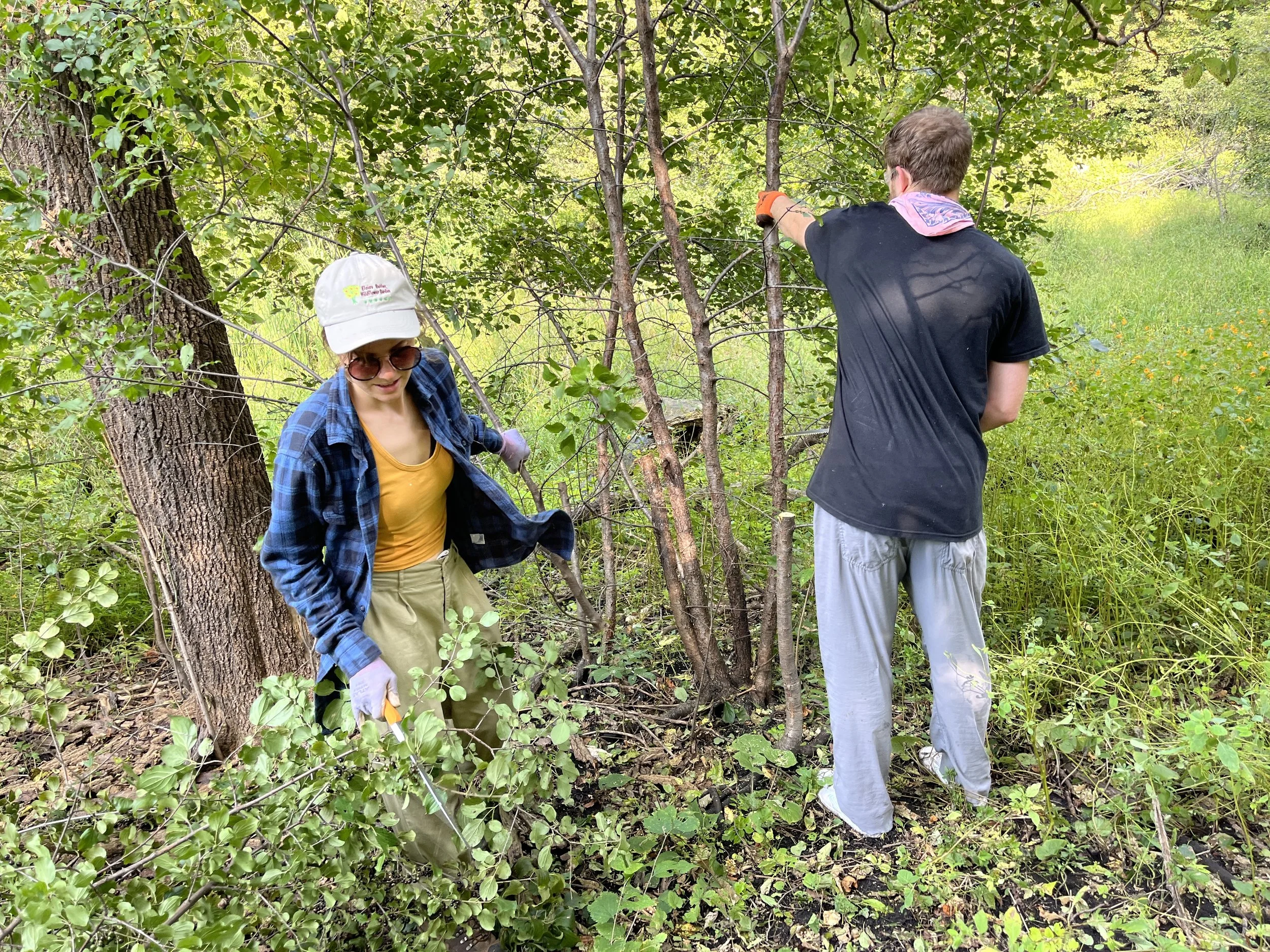
Because they typically work only a few hours at a time, volunteers are well suited to repetitive manual tasks such as hand weeding and digging up smaller plants (with guidance to minimize soil disturbance). This allows staff to focus on more complex work. Volunteers can also cut and haul invasive brush, making sites more accessible so staff don’t have to spend valuable time on basic clearing and hauling.
Staff make volunteers more effective
Staff can burn brush piles, operate chainsaws, cut and treat large stumps, and carry out prescribed burns—tasks that volunteers are not authorized to perform in Minneapolis Parks.
In our system, the lack of sufficient Natural Resources Department staff severely limits what volunteers can accomplish, leading to years of frustratingly slow progress.
Each additional staff member in this area multiplies the impact of dozens of volunteers.
When these roles are properly balanced, we can finally make significant progress.